Smartphone battery capacity was stuck between 4,500 and 5,000 mAh for nearly a decade due to volumetric expansion limits in traditional graphite anodes. The commercialization of silicon-carbon (Si/C) composite anodes has disrupted this ceiling, allowing manufacturers to increase energy density by up to 20% within the exact same physical envelope while maintaining strict structural stability.
Endurance Comparison: Xperia 10 VII, OnePlus 15, and Galaxy S26+
We analyze how different hardware setups utilize their battery reserves: the lightweight efficiency champion Sony Xperia 10 VII, the high-capacity fast-charging titan OnePlus 15, and the standard-bearer Samsung Galaxy S26+.
Sony Xperia 10 VII
Cell Capacity: 5,000 mAh High-Cycle Li-ion
Wired Rate: 21W USB-PD 3.0
Hardware Profile: Energy-efficient 4nm Mid-range SoC
Tested Active Runtime: ~34 hours blended use
OnePlus 15
Cell Capacity: 6,000 mAh Silicon-Carbon Dual-cell
Wired Rate: 100W SUPERVOOC (0–100% in 28 mins)
Hardware Profile: Flagship Snapdragon 8 Elite + 120Hz 2K
Tested Active Runtime: ~27 hours blended use
Samsung Galaxy S26+
Cell Capacity: 4,900 mAh High-Density Cell
Wired Rate: 45W PPS Fast Charging 2.0
Hardware Profile: QHD+ Dynamic AMOLED 2X Display
Tested Active Runtime: ~21 hours blended use
Silicon-Carbon Anode Technology Explained
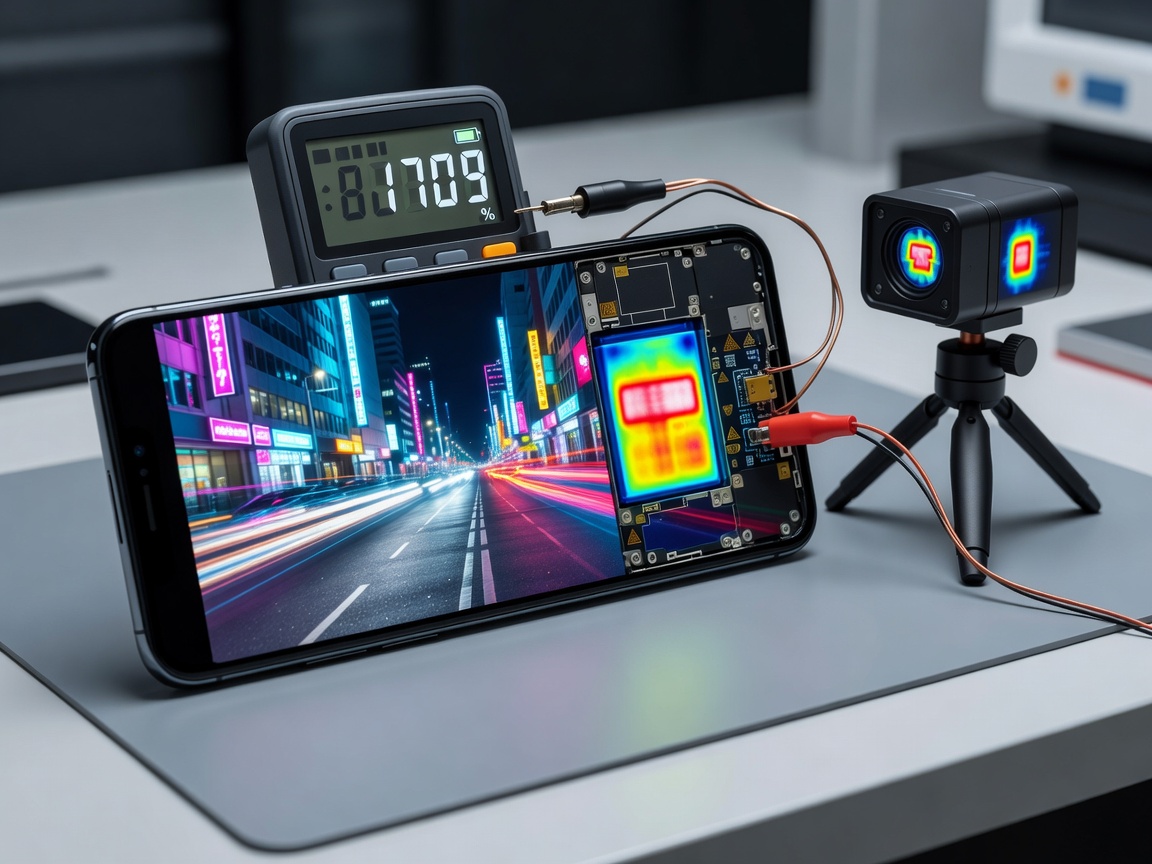
Silicon can absorb significantly more lithium ions than traditional graphite—roughly ten times the theoretical capacity per gram. However, untreated silicon swells up to 300% during charging cycles, which historically destroyed battery cells after a few dozen uses.
The 6,000 mAh cell inside the OnePlus 15 uses nano-porous carbon cages that enclose microscopic silicon particles. This allows the silicon to expand safely into internal voids without fracturing the external electrode. As a result, users gain a 6,000 mAh capacity in a phone that remains under 8.5mm thick, rated for 1,600 full charge cycles before dropping to 80% original capacity.
Efficiency vs. Brute Capacity: Sony's 2-Day Strategy
While OnePlus achieves endurance through high raw capacity, the Sony Xperia 10 VII reaches multi-day longevity through strict power conservation. By pairing an efficient Snapdragon 6 Gen 3 processor with a 60/120Hz auto-switching OLED panel and omitting power-hungry background coprocessors, its 5,000 mAh battery delivers some of the highest screen-on runtimes recorded in modern testing.
Sony also employs its proprietary Battery Care algorithm, which learns your daily sleep patterns and delays the final 20% of charging until shortly before you wake up. This minimizes the time the cell spends at peak 4.4V stress, effectively doubling the chemical lifespan of the pack.
Charging Protocols: Proprietary Superchargers vs. Universal PPS
Charging convenience is about more than just battery size. The OnePlus 15 can fully recharge from empty in under 30 minutes using its bundled 100W brick, but requires proprietary SUPERVOOC protocol cables to reach full speed. On generic third-party USB-C PD plugs, charging falls back to 27W.
Samsung adopts the universal Programmable Power Supply (PPS) protocol on the Galaxy S26+. While its 45W maximum speed takes approximately 58 minutes for a full replenishment, it can achieve top charging rates using standard third-party laptop chargers and desktop power hubs without requiring proprietary accessories.
Pros and Cons Analysis
Sony Xperia 10 VII
- Pros: Exceptional multi-day battery life, advanced battery protection features, lightweight build.
- Cons: Slower 21W recharge speeds take nearly two hours for a complete cycle.
OnePlus 15
- Pros: Massive 6,000 mAh capacity, rapid 100W wired & 50W wireless speeds, 1,600-cycle life rating.
- Cons: Requires manufacturer charging gear to access peak 100W speeds.
Samsung Galaxy S26+
- Pros: Reliable 45W charging works with standard PPS chargers, predictable battery health controls.
- Cons: Smaller battery capacity than leading silicon-carbon competitors.
Final Guidance
Frequent travelers and outdoor enthusiasts who spend extended periods away from power outlets will find the Sony Xperia 10 VII unmatched for low-power standby endurance. Power users who want both flagship performance and rapid top-ups will be best served by the OnePlus 15, while those who prioritize universal USB-C charging simplicity can rely on the Galaxy S26+.